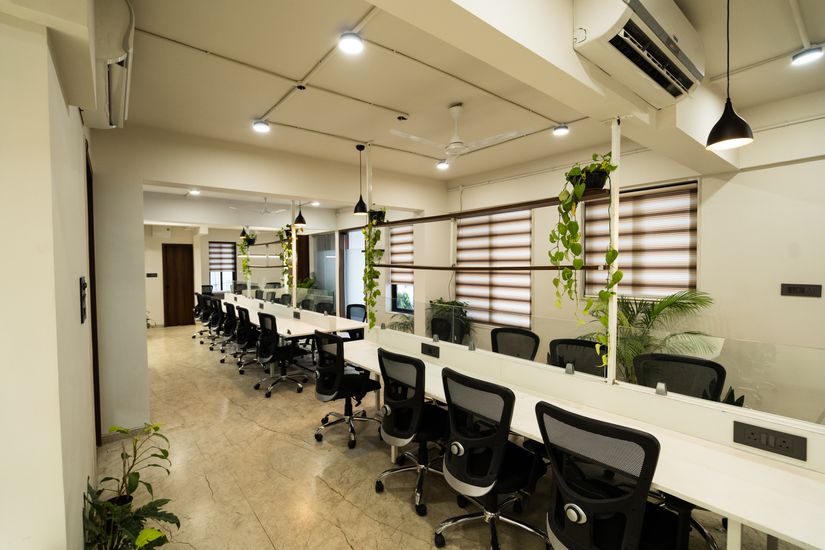
Why Pune Is India's Top GCC Destination in 2026 — And What It Means for Your Office Space
If you have been watching Pune's commercial real estate market in 2026, one trend stands above everything else: the Global Capability Centre boom. In the first quarter of 2026 alone, GCCs accounted for 69% of all office leasing activity in Pune — a number that would have seemed extraordinary just five years ago. Today, it is simply the reality of how the city has transformed. For business owners, HR leaders, and real estate decision-makers, this shift raises an important question: what does Pune's GCC boom mean for you, whether you are setting up a new facility or trying to find the right office space in a market where competition for Grade A space is intensifying? This post breaks it all down.
What Is a GCC and Why Is Pune Leading the Charge?
A Global Capability Centre is an offshore delivery unit of a multinational company — typically handling functions like technology development, finance and accounting, HR operations, data analytics, and customer support. Unlike a BPO, a GCC is fully owned by the parent company and operates as a strategic extension of global headquarters rather than a third-party vendor.
Pune now hosts over 350 GCCs, with more than 80 added in the 2024–25 period alone. The sectors driving this include IT and technology, banking, financial services and insurance, pharmaceuticals, engineering, and manufacturing. Companies from the United States, United Kingdom, Germany, and Japan are all choosing Pune — and they are choosing it over cities like Hyderabad, Chennai, and Bengaluru for very specific reasons.
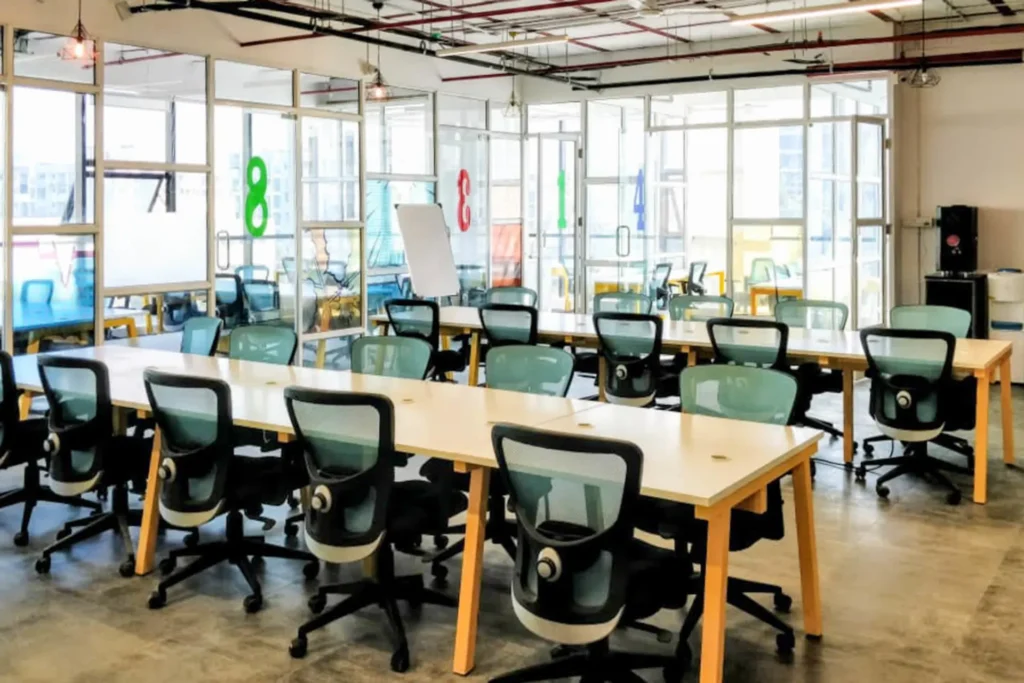
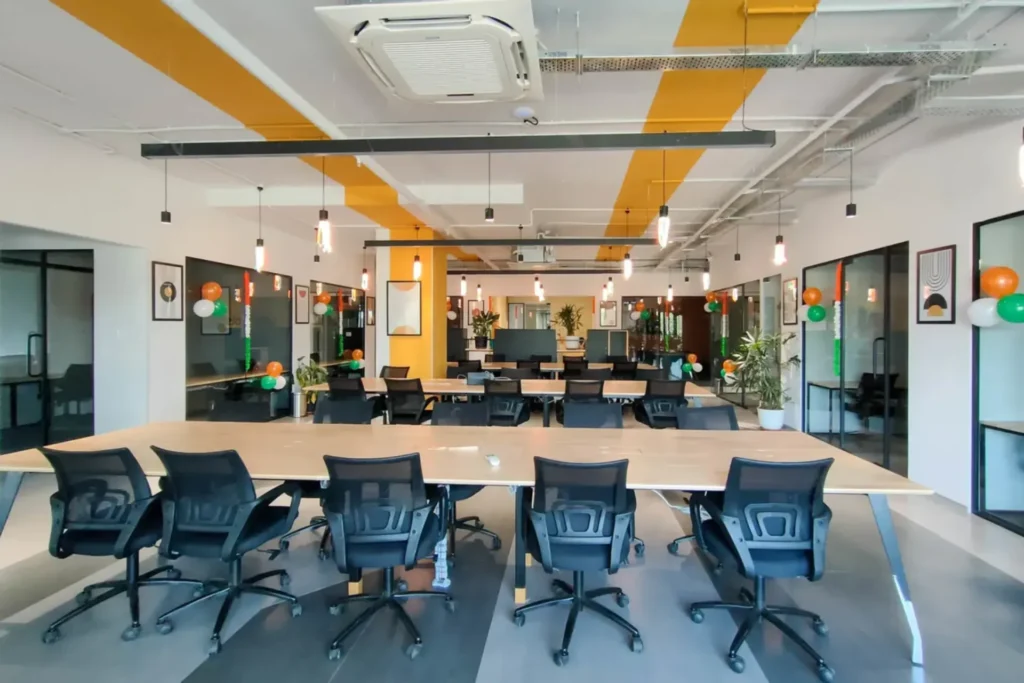
Talent availability is the first reason. Pune's universities and engineering colleges produce over 70,000 graduates annually across technical and management disciplines. For a GCC that needs to hire 500 to 2,000 professionals quickly, that talent pipeline is non-negotiable.
Cost advantage is the second reason. Compared to Bengaluru or Mumbai, Pune offers Grade A office space at 15–25% lower rental costs, without any compromise on infrastructure quality or employee experience.
Connectivity and livability is the third reason. Pune's expanding metro network, direct international flight connections, and high quality of life make it easier to attract senior talent who might otherwise be reluctant to relocate.
The Office Space Challenge Every GCC Faces
Here is where most GCC setup stories get complicated. Finding the right building is only the first part of the problem. The second, and often harder, part is making that building work for 500, 1,000, or 2,000 employees — in a way that reflects the company’s global standards while functioning efficiently in a Pune context.
This means thinking through workstation density, collaboration zones, leadership cabins, server room placement, cafeteria sizing, VRV air conditioning specifications, and security access systems — all before a single employee walks through the door.
Getting this wrong is expensive. Underestimating the cafeteria capacity by 20% means a rework six months into operations. Choosing a standard split AC system instead of a VRV air conditioning system means higher energy costs and maintenance headaches as the team scales. Poor workstation planning means either wasting expensive real estate or creating uncomfortable density that hurts productivity.
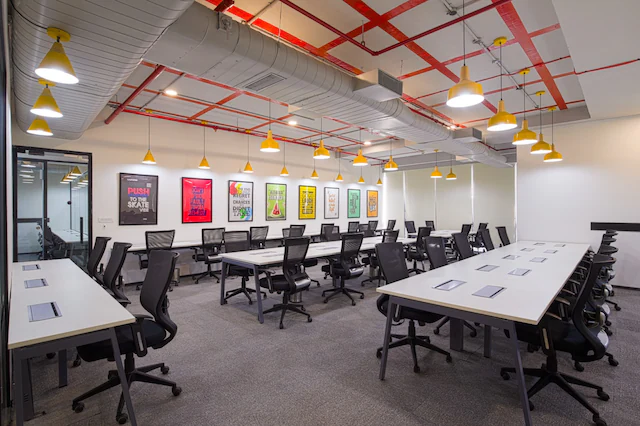
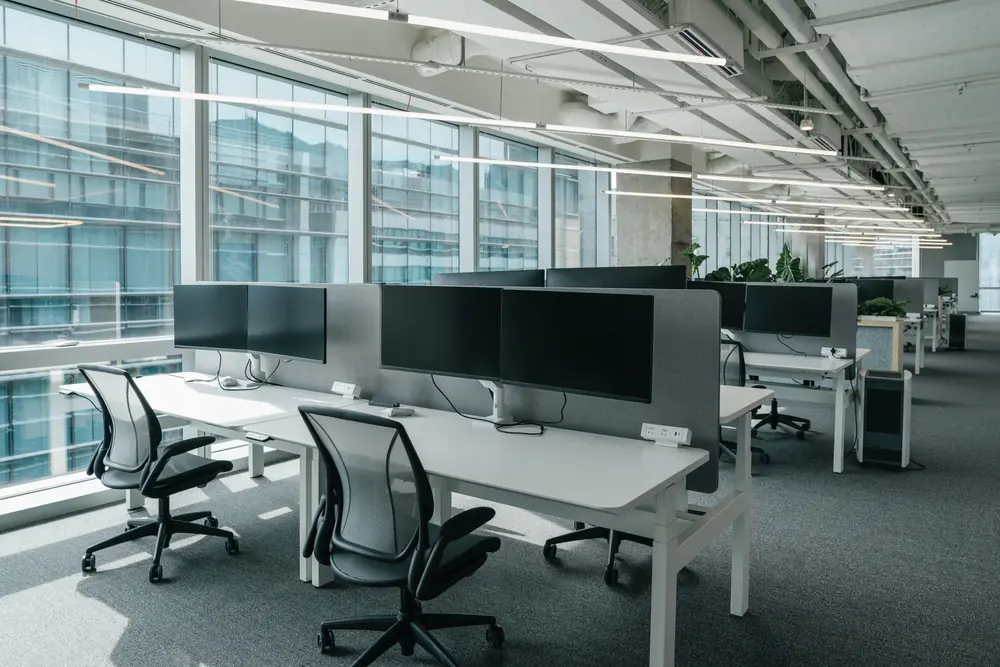
The Bajaj Spaces Advantage: One Partner from Search to Handover
At Bajaj Spaces, we work with GCCs and enterprise clients at every stage of the office journey — from identifying the right location in Hinjewadi, Kharadi, or Baner, to designing and executing a complete office interior fit-out that meets global workplace standards.
This single-partner model eliminates the coordination friction that comes from working with a property broker, a separate interior design firm, and an independent MEP contractor. Everything — site identification, lease negotiation support, 3D design, material procurement, on-site execution, and final handover — is managed under one roof.
Our GCC projects range from 10,000 sq ft pilot offices for companies entering Pune for the first time, to 1,50,000 sq ft campuses for established multinationals expanding their India footprint.
What to Look for When Choosing Your GCC Office Space in 2026
Before signing any lease, there are five questions every GCC decision-maker should answer:
1. Does the building support your headcount growth plan for the next 5 years? The best GCC offices are chosen not just for today’s team size but for where the team will be at Year 3 and Year 5.
2. What is the floor plate efficiency? Irregular floor plates waste space. Efficient rectangular or L-shaped plates let you plan workstations, collaboration zones, and service areas without compromise.
3. Is the MEP infrastructure GCC-grade? Power backup, data cabling capacity, server room cooling, and HVAC specifications need to match enterprise requirements from Day 1.
4. What are the lease terms and escalation clauses? GCC leases in Pune typically run 9–15 years with 5–15% escalations built in. Understanding these upfront protects your cost model.
5. Who is handling the fit-out? A well-executed fit-out can be completed in 60–90 days for most mid-size GCC spaces. Delays here have direct business impact — every week of delay is a week your team cannot start operations.