Pune's Warehouse Boom Is Real: Why Businesses Are Rushing to Lease Industrial Space in 2026
Pune has always been an industrial city. Chakan, Ranjangaon, Talegaon, Bhosari — these names have meant manufacturing and logistics for decades. But what is happening in Pune's warehousing and industrial real estate market in 2026 is something different in scale and pace. It is a boom driven not just by Pune's traditional manufacturing base but by a convergence of forces — e-commerce, quick commerce, 3PL expansion, GCC-linked supply chains, and a national logistics policy that is actively funnelling investment into western India. The numbers make this impossible to ignore. According to a Q1 2026 warehousing market report by Vestian, Pune recorded 4.46 million sq ft of warehouse absorption in Q1 2026 alone — a staggering 162% surge quarter-on-quarter and 42% growth year-on-year, making it the second-largest warehousing market in India after Mumbai. Together, Mumbai and Pune accounted for 81% of India's total warehousing leasing activity in the quarter. This is not a local story anymore. Pune is now at the centre of one of the most active logistics and industrial real estate markets in Asia.
What Is Driving Pune's Warehousing Surge?
Understanding the drivers behind these numbers helps you make a better decision about where to position your warehouse operation in Pune.
Manufacturing dominance. The Savills India H1 2026 industrial report confirms that manufacturing accounted for 30% of total warehouse leasing nationally — the largest single occupier category. In Pune, this is even more pronounced. The city's engineering, automotive, and pharmaceutical manufacturing clusters in Chakan, Bhosari, and Ranjangaon are generating demand for modern logistics space to support inbound raw material storage, outbound finished goods distribution, and in-between buffer warehousing.
3PL and e-commerce expansion. Third-party logistics operators contributed 24% of national warehouse leasing in H1 2026, and Pune is a primary target market for 3PL expansion. The reason is simple: Pune sits at the intersection of the Mumbai consumption market and the Pune-Nashik-Aurangabad manufacturing corridor, making it the natural hub for distributing goods efficiently across western and central Maharashtra.
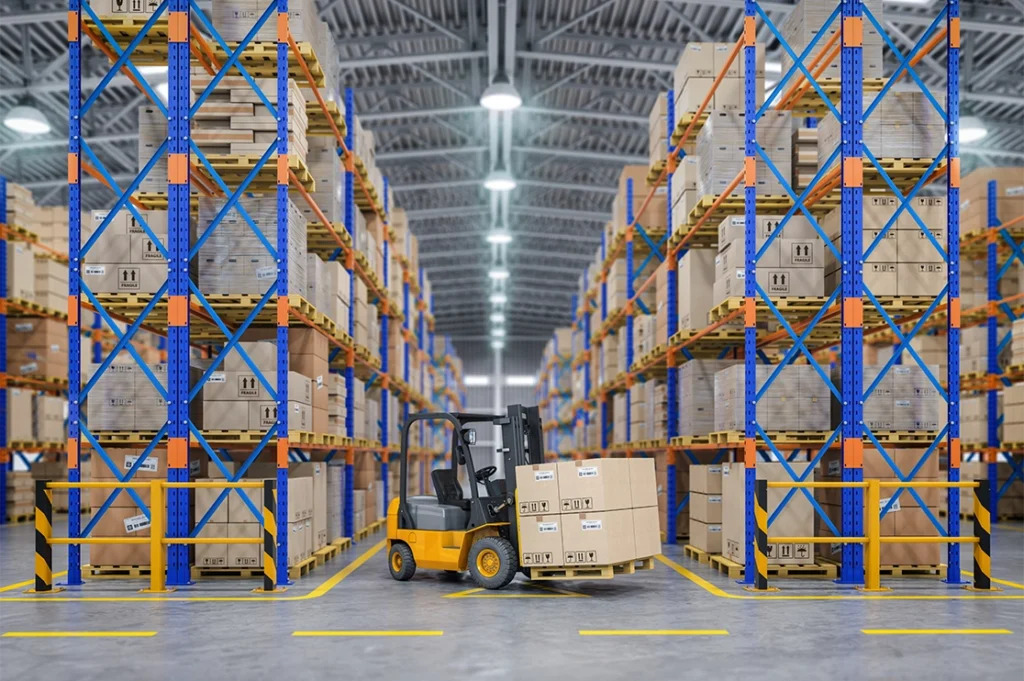
Quick commerce infrastructure. The rapid expansion of quick-delivery platforms — promising 10 to 30-minute delivery windows — requires dense networks of small-format dark stores and micro-warehouses in residential-proximate locations. Pune's growing urban population in areas like Wakad, Kharadi, Baner, and Hadapsar is driving demand for this new format of industrial space that did not meaningfully exist three years ago.
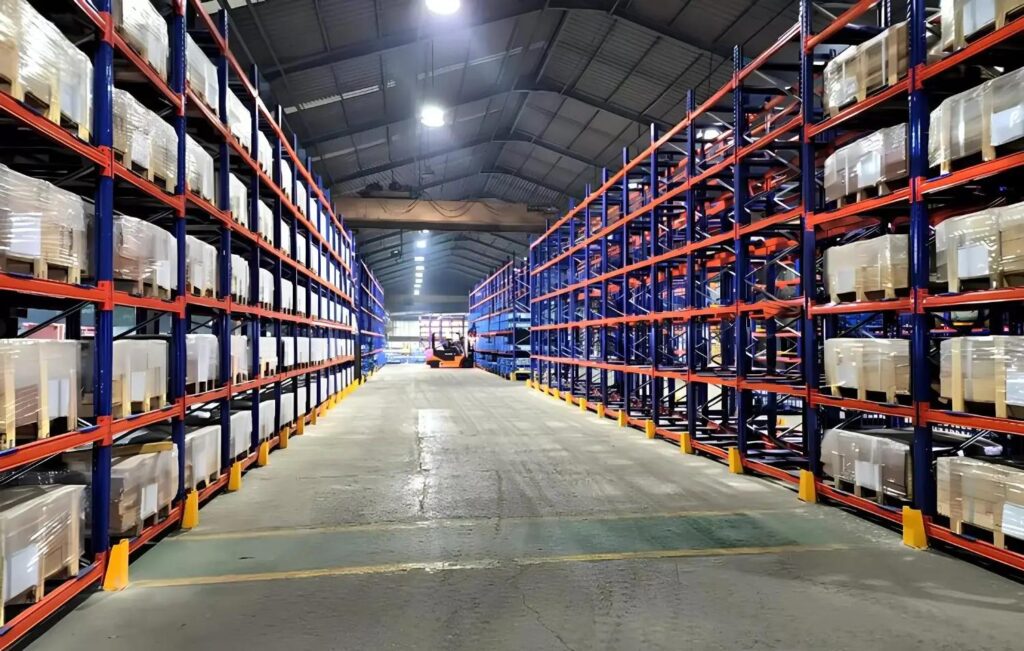
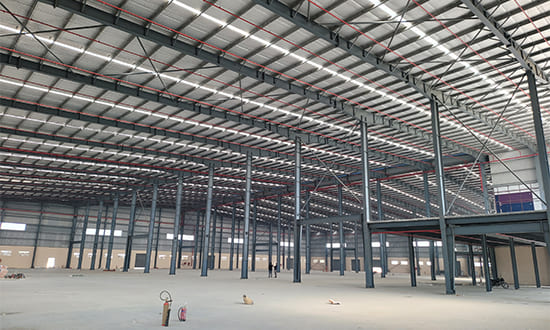
Grade A preference shift. Perhaps the most significant structural trend is the move toward Grade A warehousing. According to the Savills H1 2026 report, Grade A asset absorption rose to 59% of total leasing in H1 2026, up from 55% in H1 2025. Businesses are no longer willing to compromise on ceiling height, floor loading capacity, dock levellers, fire suppression systems, and power backup — because modern supply chain operations demand these features as a baseline, not a luxury.
Where in Pune Should You Look for Warehouse Space?
Chakan is Pune’s most established warehousing destination, accounting for 43% of Pune’s warehouse leasing in H2 2025 according to Cushman & Wakefield’s Pune MarketBeat. It sits at the junction of the Pune–Nashik Highway and the Pune–Mumbai Expressway, making it ideal for manufacturing-linked logistics and automotive supply chains. Chakan hosts suppliers to Volkswagen, Mercedes-Benz, Bajaj Auto, and dozens of tier-1 auto components manufacturers.
Ranjangaon is the second-largest logistics destination in Pune, particularly strong for FMCG and consumer goods distribution. Its position on the Pune–Ahmednagar corridor and proximity to the MIDC industrial area make it suitable for large-format distribution centres serving eastern Maharashtra.
Talegaon is emerging as a strong alternative to Chakan, with more available land, newer supply stock, and slightly lower rental rates. It is particularly attractive for pharmaceutical companies, food processing units, and cold chain operators.
Bhosari and Pimpri-Chinchwad offer the advantage of proximity to the city’s residential population — important for last-mile and quick-commerce warehousing where delivery speed depends on being close to the end consumer.
If you are evaluating godowns and warehouse spaces for lease in Pune, Bajaj Spaces can help you map available options across all these corridors, with verified, currently-available listings and real-time rental data.
Warehouse + Office: The Combination That Growing Businesses Overlook
One of the most common requirements we see from growing manufacturing, logistics, and distribution businesses is a combination space — a warehouse or godown that also includes a properly designed office component for their operations team, accounts function, dispatch coordination, and management presence.
This is not as simple as putting a desk in the corner of a warehouse. A well-designed warehouse-office integration includes proper thermal insulation between the warehouse and office zones, independent HVAC for the office area, fire separation walls, separate entry and exit points for office staff and warehouse personnel, and appropriate MEP (mechanical, electrical, and plumbing) planning for both functions.
For businesses that want to get this right from Day 1, Bajaj Spaces handles both the property identification and the complete interior setup. Whether you need a formal office within your warehouse facility or a standalone office space for lease in Pune to complement a separate warehouse location, our team can plan and execute both as a coordinated project.
The Cushman & Wakefield Pune MarketBeat reports that industrial land values in Pune’s key corridors rose 32–35% year-on-year — reflecting the structural tightening of industrial real estate in the city. When land values rise that sharply, warehouse rental rates follow within 12–18 months.
The businesses that locked in warehouse leases in Chakan and Ranjangaon in 2024 and early 2025 are now sitting on below-market rental commitments as the market has moved above them. The businesses evaluating options today are still in a position to secure well-located, Grade A space at rates that will look favourable by the end of 2026.
Pune’s 162% quarterly surge in warehouse absorption is not a temporary spike. It is the opening act of a multi-year logistics infrastructure story driven by manufacturing expansion, e-commerce growth, and supply chain formalisation. The smart move is to be positioned within it before the best locations are gone.